Devotional music is the largest single revenue category for many Indian independent artists, and yet it is also the most overlooked in mainstream music distribution comparison content. While distributor reviews obsess over Spotify per-stream rates and Western indie focus, devotional music in India operates on completely different economics. Caller tune is not a side income for devotional artists. It is often 50 to 70 percent of total earnings. JioSaavn devotional category has dedicated editorial coverage. YouTube devotional channels with millions of subscribers continuously republish content. The audience patterns, platforms, and release timing all differ structurally from secular music.
Choosing distribution for devotional music is not really a choice if you understand the economics. Any distributor that does not cover Indian caller tune networks misses the majority of your expected revenue. Western distributors built for global Spotify markets are structurally unsuitable for devotional music regardless of how good they are for other genres. The right answer narrows to India-native distribution that includes all 4 caller tune networks plus native JioSaavn delivery plus YouTube Content ID, with INR pricing matching how Indian devotional artists actually receive payments.
This blog gives you the complete picture for devotional music distribution in 2026. The sub-categories within devotional music (bhajan, aarti, mantra, qawwali, shabad, gospel, regional devotional). Why caller tune dominates devotional revenue more than any other genre. Festival release timing strategy. YouTube devotional ecosystem and Content ID opportunity. Which distributor handles the full devotional revenue stack. By the end you will know exactly how to distribute and release devotional music for maximum reach and revenue.
Devotional Music Sub-Categories in India 2026
Devotional music in India spans multiple religious traditions and sub-categories, each with specific audience patterns:
Hindu Devotional
- Bhajan • Devotional songs to specific deities (Krishna, Shiv, Ram, Hanuman, Durga, etc.)
- Aarti • Ritual prayer songs performed at temples and homes (Ganesh Aarti, Lakshmi Aarti, etc.)
- Mantra • Chanted Sanskrit verses (Gayatri Mantra, Hanuman Chalisa, Mahamrityunjaya, etc.)
- Kirtan • Call-and-response devotional singing (especially Hare Krishna tradition)
- Stuti and Stotra • Praise hymns to specific deities
Sikh Devotional
- Shabad • Gurbani recitation and singing from Sikh scriptures
- Kirtan • Sikh musical tradition of singing shabads
- Sukhmani Sahib • Long-form Sikh devotional recitation
Sufi and Islamic Devotional
- Qawwali • Sufi devotional music tradition
- Naat and Hamd • Islamic praise songs
- Ramadan and Eid music • Festival-specific Islamic devotional
Christian Devotional
- Gospel music • Christian devotional traditional and contemporary
- Christmas devotional • Carols and Christmas-specific music
- Hymns • Traditional Christian hymns
Regional Devotional
- Gujarati bhajans • Significant Gujarati devotional tradition
- Marathi abhang • Maharashtrian devotional song tradition
- Tamil and Telugu devotional • South Indian temple and home devotional music
- Bengali devotional • Including Durga Puja songs, Tagore-influenced devotional
- Bhojpuri devotional • Including Chhath Puja music
Why sub-category matters: Each sub-category has specific audience patterns, festival timing, and platform behavior. A Krishna bhajan artist releases around Janmashtami and Holi. A Sufi qawwali artist targets Eid and Urs ceremonies. A Gospel artist focuses on Christmas and Easter. Sub-category awareness shapes both content and distribution strategy.
Why Devotional Music Has the Highest Caller Tune Adoption
Caller tune adoption for devotional music in India is structurally higher than any other genre. Multiple factors combine:
Reason 1: Cultural Appropriateness for Caller Tune
Caller tune plays publicly when someone calls a subscriber, making the song choice visible to others. Devotional content is universally appropriate for this public-facing position. Listeners often prefer setting devotional caller tunes specifically because they convey spirituality, auspiciousness, and cultural identity to callers. Secular music sometimes does not fit certain calling contexts (calling elders, professional contacts, religious settings), but devotional music fits all contexts.
Reason 2: Cross-Generational Audience
Devotional music has the broadest age demographic of any Indian music genre. Listeners include young children through elderly grandparents. Older listeners who do not actively stream music on Spotify or JioSaavn still actively use caller tune services. This captures a demographic segment that other genres miss entirely. For devotional artists, the caller tune audience is structurally larger than the streaming audience.
Reason 3: Festival and Religious Occasion Adoption
Religious festivals throughout the Indian calendar create predictable caller tune setting behavior. Listeners set Krishna bhajans during Janmashtami, Shiv bhajans during Mahashivratri, Mata devotional during Navratri, Ganesh aartis during Ganesh Chaturthi, Christian hymns during Christmas, Ramadan music during Eid, and so on. Each festival drives a new wave of caller tune adoption.
Reason 4: Daily Spiritual Practice Usage
Many Indian listeners include devotional caller tune as part of daily spiritual practice. Morning devotional songs, prayer time mantras, and meditation music are set as caller tunes deliberately to maintain a spiritual atmosphere. This creates the most consistent recurring caller tune usage of any music category.
Reason 5: Longer Caller Tune Tenure
Subscribers tend to keep devotional caller tunes longer than secular caller tunes. While trending songs as caller tunes get changed when the trend fades, devotional caller tunes often persist for months or years. This means each devotional caller tune subscription generates substantially more cumulative royalty over time.
For comprehensive caller tune data, network-specific rates, and revenue mechanics, see our caller tune revenue guide for Indian artists.
Where Devotional Artists Actually Earn
Honest revenue stream breakdown for typical Indian devotional independent artists in 2026:
| Revenue Stream | Approx Share | Notes |
| Caller tune (4 networks) | 50-70% | HIGHEST of any Indian music genre. Cross-generational audience, festival adoption, daily practice usage |
| YouTube + Content ID | 20-30% | Massive devotional channel reuploads, festival videos, home prayer recordings all earn Content ID |
| JioSaavn streaming | 10-15% | Dedicated devotional categories on JioSaavn. Native delivery matters |
| Spotify streaming | 5-10% | Smaller share given devotional audience demographics skew older |
| Apple Music | 2-5% | Premium subscriber segment, less devotional consumption |
| Instagram audio | 1-3% | Limited devotional Reels usage compared to mainstream |
| Sync placements | Variable | Religious films, spiritual content, temple installations, ceremonial use |
The devotional music distribution math: Caller tune at 50-70% of revenue means ANY distributor missing caller tune captures only 30-50% of expected devotional music earnings. This is not optimization. This is missing the majority of what your devotional music would earn with proper distribution. For devotional artists, distributors without 4-network caller tune coverage are structurally not viable regardless of their global Spotify capability.
For complete data on Indian music revenue patterns across genres and the State of Indian Independent Music 2026, see our comprehensive data study.
Festival Release Timing for Devotional Music
Devotional music release timing is more strategic than any other genre because religious festivals create predictable demand spikes. Key Indian festivals and the devotional music they drive:
| Festival | Timing | Devotional Music Type |
| Mahashivratri | Feb/March | Shiv bhajans, Mahamrityunjaya mantras, Shiv aartis |
| Holi | March | Krishna bhajans, Holi devotional, Radha-Krishna songs |
| Ram Navami | March/April | Ram bhajans, Hanuman Chalisa, Ramayan-based devotional |
| Hanuman Jayanti | April | Hanuman bhajans and chalisas |
| Eid (Eid ul-Fitr) | Varies (lunar) | Islamic devotional, Naat, Eid-specific qawwali |
| Janmashtami | August | Krishna bhajans, Krishna aartis, Govind devotional |
| Ganesh Chaturthi | Aug/Sept | Ganesh aartis, Ganpati bhajans (especially Marathi) |
| Navratri/Durga Puja | Sept/Oct | Mata devotional, Durga Maa bhajans, regional Devi songs |
| Diwali | Oct/Nov | Lakshmi bhajans, Ganesh-Lakshmi aartis, festive devotional |
| Chhath Puja | Oct/Nov | Chhath Maa songs, Bhojpuri devotional, Surya devotional |
| Christmas | December | Christian devotional, carols, Christmas hymns |
| Gurpurabs | Various dates | Sikh shabads, Gurbani recordings (especially Punjabi) |
Festival release strategy: Schedule devotional music releases 3 to 4 weeks before the relevant festival. This enables editorial playlist pitching to JioSaavn devotional categories and Spotify festival playlists. Pre-release also allows promotional content build-up. Caller tune adoption spikes typically in the week before and during the festival itself. Releases timed to festivals consistently outperform random-timing releases for devotional music.
For Bhojpuri-specific Chhath Puja devotional context, see our Bhojpuri music distribution guide. For Punjabi shabad context, see
YouTube Devotional Ecosystem and Content ID
YouTube is the second largest revenue source for devotional artists after caller tune. The devotional ecosystem on YouTube India is enormous and structurally favorable for Content ID monetization:
- Devotional YouTube channels with millions of subscribers regularly compile and republish devotional music
- Festival video content uses devotional music extensively (Diwali pooja videos, Ganesh visarjan videos, Durga Puja celebrations, etc.)
- Home prayer videos uploaded by families feature devotional music backing
- Temple ceremony recordings with devotional music as soundtrack
- Spiritual lifestyle content including yoga, meditation videos use devotional music
- Compilation channels for specific deities (“Best Krishna bhajans,” “Top Hanuman songs”) common and well-subscribed
Each fan upload using your devotional song earns Content ID royalty when active through your distributor. See best music distribution with Content ID for activation details. For devotional music with strong reupload potential, Content ID can generate significant passive monthly revenue.
Distribution Comparison for Devotional Artists
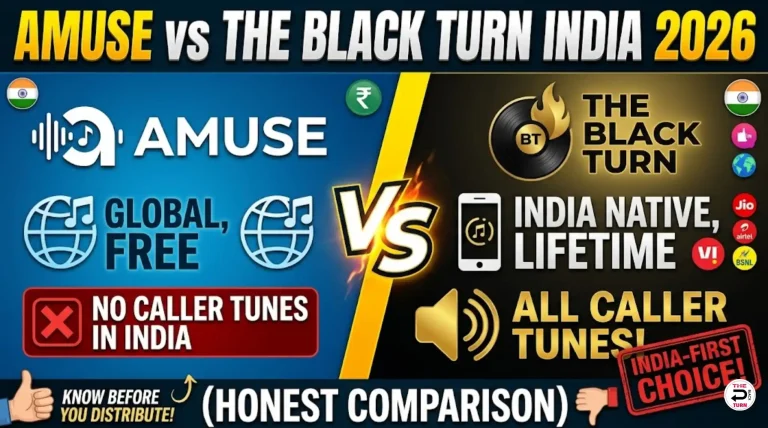
| Distributor | Caller Tune (4 networks) | JioSaavn Native | YouTube Content ID | INR |
| The Black Turn | Yes | Yes | Yes | Yes |
| DistroKid | No | Via partners | Yes | No |
| TuneCore | No | Via partners | Yes | No |
| CD Baby | No | Via partners | Yes | No |
| RouteNote Free | No | Via partners | Limited | No |
| Amuse Free | No | Via partners | Limited | No |
The structural reality for devotional artists: Of all distributors compared, only one covers all 4 caller tune networks for devotional artists. For a genre where caller tune is 50-70% of revenue, this narrows the practical choice to essentially one option. Devotional music distribution is structurally simpler than most other genre decisions because caller tune coverage is so disproportionately important that the rest of the comparison barely matters.
Ranked Best Distribution for Devotional Artists
1. The Black Turn (Decisively Best for All Devotional Artists)
The Black Turn is the structurally correct choice for devotional artists across all sub-categories (bhajan, aarti, mantra, qawwali, shabad, gospel, regional). The combination it provides:
- All 4 caller tune networks (Jio, Airtel, Vi, BSNL) on single release – the dominant revenue stream
- Native JioSaavn delivery with access to dedicated devotional categories
- YouTube Content ID for monetizing massive devotional channel reuploads
- Spotify, Apple Music, YouTube Music standard global delivery
- Instagram audio licensing for limited but growing devotional Reels usage
- INR pricing at ₹599-799 lifetime per release
- 95% royalty pass-through in INR direct to Indian bank accounts
See The Black Turn pricing for devotional music releases or review the
2. Free Tiers (Acceptable Only for Absolute Beginners)
RouteNote Free or Amuse Free for absolute beginner devotional artists releasing the first track with literally zero budget. Revenue share applies. No caller tune coverage. Acceptable only for first experimental release. The missed caller tune revenue typically exceeds the paid lifetime fee within weeks of any meaningful traction.
3. Global Distributors (Not Viable for Devotional)
DistroKid, TuneCore, CD Baby are designed for Western markets and do not integrate with Indian caller tune networks. For devotional music where caller tune is 50-70% of revenue, choosing these distributors structurally leaves the majority of expected income uncollected. They are not viable options for devotional music regardless of their global streaming delivery quality. See best caller tune distributor.
Common Mistakes Devotional Artists Make
1. Choosing Global Distributors Without Realizing Caller Tune Importance
Many devotional artists use DistroKid or similar global services because of online recommendations from Western-focused blog posts. After months, they discover their devotional songs are reaching Spotify successfully but earning very little because the dominant caller tune revenue stream is entirely missed.
2. Not Timing Releases Around Festivals
Random release timing for devotional music misses predictable demand spikes. Releasing a Krishna bhajan in November or a Christmas hymn in March means missing the natural promotional momentum that festival timing provides.
3. Skipping Content ID Activation
Devotional music has exceptional reupload potential. Not activating Content ID means letting all devotional channel reuploads, festival video uploads, and home prayer recordings using your music earn for someone else. Activate Content ID immediately.
4. Underutilizing JioSaavn Devotional Editorial
JioSaavn maintains dedicated devotional editorial categories. Many devotional artists pitch only Spotify or skip editorial entirely. JioSaavn devotional placement drives significant Indian listening.
5. Not Covering BSNL for Tier-2/Tier-3 Devotional Audience
The devotional audience includes significant Tier-2 and Tier-3 city listeners who often use BSNL. Distributors covering only Jio and Airtel skip this segment. See best caller tune distributor analysis for 4-network coverage criteria.
Frequently Asked Questions
Which is the best music distribution for devotional artists?
The Black Turn decisively. Devotional caller tune adoption is highest of any genre (50-70% of revenue). TBT covers all 4 caller tune networks + native JioSaavn + Content ID + INR pricing at ₹599-799 lifetime. Global distributors miss caller tune entirely making them structurally unviable for devotional music.
How much do devotional artists earn from music?
Popular devotional songs typically ₹10,000-1,00,000+ monthly during festival seasons. Established devotional artists across catalogs significantly higher. Caller tune drives most revenue due to recurring subscription nature and longer caller tune tenure for devotional content.
Does devotional music have the highest caller tune adoption?
Yes, structurally the highest of any Indian music genre. Cultural appropriateness for caller tune position, cross-generational audience, festival adoption, daily spiritual practice usage, longer caller tune tenure all combine. See caller tune revenue data.
When should devotional artists release music?
3-4 weeks before relevant festivals. Mahashivratri (Feb-March), Holi (March), Ram Navami (April), Janmashtami (Aug), Ganesh Chaturthi (Aug-Sept), Navratri (Sept-Oct), Diwali (Oct-Nov), Christmas (Dec), Eid (varies). Festival timing creates predictable adoption spikes.
Where do devotional artists earn most?
Caller tune 50-70%, YouTube + Content ID 20-30%, JioSaavn 10-15%, Spotify 5-10%, Apple Music 2-5%. Caller tune dominance is more pronounced than any other Indian genre due to cross-generational devotional audience using caller tune more than streaming.
Should bhajan singers use DistroKid or TBT?
TBT decisively. DistroKid misses Indian caller tune entirely which is 50-70% of devotional revenue. Even successful Spotify delivery captures only 30-50% of available devotional earnings. TBT INR lifetime covers full devotional revenue stack.
Can devotional songs get YouTube Content ID?
Yes through distributors with Content ID partner status. Particularly valuable for devotional given massive channel reupload, festival video, home prayer video usage. Significant passive revenue stream. See Content ID guide.
How much does devotional music distribution cost?
₹599-799 lifetime per release with TBT (full coverage including caller tune which is dominant devotional revenue). Global distributors USD yearly cost more cumulatively and miss caller tune. For devotional artists, paying any distribution without caller tune is structurally not viable. See pricing.
Conclusion
Devotional music distribution decision in 2026 is structurally simpler than any other Indian genre because caller tune dominance is so disproportionate. Caller tune at 50-70% of devotional music revenue means any distributor missing caller tune captures only the minority of expected earnings. The structural requirement is all 4 caller tune networks coverage plus native JioSaavn delivery plus YouTube Content ID, all in INR pricing matching how Indian devotional artists actually receive payments.
The Black Turn fits this requirement at approximately Rs 599 to 799 INR lifetime per release. No global distributor (DistroKid, TuneCore, CD Baby, Amuse, RouteNote) covers Indian caller tune networks. Free tiers also miss caller tune. The choice is essentially predetermined once devotional music economics are understood. For devotional artists across bhajan, aarti, mantra, qawwali, shabad, gospel, and regional sub-categories, India-native distribution with caller tune coverage is the answer.
Ready to release your devotional music with full revenue coverage? Get started with The Black Turn and distribute to Spotify, Apple Music, JioSaavn (native delivery to devotional categories), YouTube Music, YouTube Content ID, all 4 caller tune networks where 50-70 percent of devotional music revenue comes from, Instagram, and 150+ platforms in one INR lifetime payment per release.
Devotional music has unique economics that other Indian genres do not match. Choose a distribution that captures all available revenue streams, not just streaming. For devotional artists in 2026, this means India-native lifetime distribution with explicit 4-network caller tune coverage. Anything else leaves the majority of expected devotional music revenue uncollected, which for a genre this large and consistent is not a reasonable trade-off.