Pitching happens inside Spotify for Artists, and you get one pitch per unreleased track, which means the release must be scheduled in advance and not yet live. Aim for at least two to three weeks before release day, because a track pitched too late, or already released, cannot be considered for editorial placement at all. The pitch form matters less than most artists think; what carries weight is accurate genre and mood data, a track that fits an actual playlist that exists, and early listener behaviour once it goes live. Algorithmic placement, Release Radar and Discover Weekly, is not pitched at all and is driven entirely by real listener signals: saves, playlist adds, repeat plays and completion rate.
That is the summary. Below is how each layer works, what you can influence, and what is a waste of money.
Platform features change. Check current details in Spotify for Artists before planning a campaign around any specific behaviour.
The Three Layers of Spotify Playlists
Artists talk about “playlists” as one thing. They are three, with completely different mechanics:
| Type | Who Controls It | How You Get On |
| Editorial | Spotify’s curators | Pitch through Spotify for Artists before release |
| Algorithmic | Spotify’s systems | Earned through listener behaviour, cannot be pitched |
| User and third-party | Individual curators | Direct outreach, or organic discovery |
Most of the frustration around “how do I get on playlists” comes from applying editorial tactics to algorithmic outcomes, or from buying access to third-party playlists that are worth nothing and can be actively dangerous.
Editorial: The One You Actually Pitch
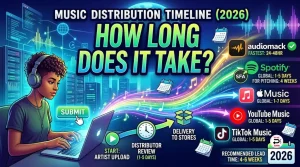
Requirement one: the track must be unreleased and scheduled. This is the hard constraint that decides everything else. If your song is already live, you cannot pitch it. This is why the release date you choose at distribution matters so much, and why scheduling two to four weeks ahead is standard practice, covered in how long distribution takes.
Requirement two: your metadata must be accurate. Genre, mood, language and instrumentation are what let a curator’s search surface your track at all. A Punjabi track tagged as generic pop will not appear when a curator is filling a Punjabi playlist. Correct tagging is covered in metadata mistakes that kill streams.
Requirement three: pitch to a playlist that exists. Before writing anything, look at what Spotify actually curates in your genre and language. Pitching a devotional track as if it were dance music, or describing your song in language no playlist theme matches, wastes the one pitch you get.
What to write: be specific and factual rather than promotional. Genre, mood, instrumentation, language, the story behind the track, where it was recorded, any notable collaborators, and what is genuinely happening around the release. Curators read a large volume of these; accuracy is more useful than enthusiasm.
What not to do: exaggerate your numbers, compare yourself to major artists, or write a biography instead of describing the song.
Algorithmic: The One That Matters More
Release Radar and Discover Weekly reach far more listeners for most independent artists than editorial placement does, and they cannot be pitched. They respond to behaviour:
- Saves. A listener saving your track is the strongest single signal
- Playlist adds by real users
- Completion rate. People listening to the end rather than skipping at 15 seconds
- Repeat plays within a short window
- Follower activity. Release Radar goes to your followers first, so follower count and engagement compound across releases
The practical implication is that your first 48 hours are not about volume, they are about quality of engagement. A hundred listeners who save and repeat is a better signal than a thousand who skip.
This is also why your own audience matters more than any playlist: telling your existing followers to save the track directly improves your algorithmic position, which then reaches strangers. The release-week structure for this is in the music marketing guide.
Third-Party Playlists: Where the Money Goes to Die
There is a large industry selling playlist placement. Most of it ranges from useless to actively harmful.
The useless end: playlists with tens of thousands of followers and no real listeners, where your track sits between unrelated songs and gets skipped. Skips damage your algorithmic profile.
The harmful end: placements driven by bots or artificial streaming. Platforms detect this, and consequences include royalty clawbacks, track removal and account penalties. It is one of the fastest ways to destroy a catalogue, and it is worth understanding before anyone offers you “guaranteed streams.”
The legitimate exception: genuine independent curators with real, engaged audiences, approached directly and honestly, sometimes accepting submissions. That is outreach, not purchase.
A simple test: if a service guarantees a specific number of streams, it is buying them, not earning them.
The Realistic Timeline
| When | What to Do |
| 4 weeks before | Finalise master and artwork, set release date at distribution |
| 3 weeks before | Submit pitch in Spotify for Artists, verify all metadata |
| 2 weeks before | Pre-save campaign, tell your own audience |
| 1 week before | Content prepared for release day, short-form video ready |
| Release day | Direct your existing audience to save, not just stream |
| Week 1-2 | Sustain activity; algorithmic response builds on early behaviour |
| Week 3-4 | Assess data in Spotify for Artists, plan the next release |
Note how little of this is the pitch itself. The pitch is one form; everything else is the actual work.
What to Do When You Are Not Picked
Most pitches do not result in editorial placement, including from good artists with good songs. That is normal arithmetic, not a verdict on the music.
What still happens if you pitched properly:
- Pitching signals to Spotify that the release exists, which supports Release Radar delivery to your followers
- Your metadata is now accurate, improving discovery generally
- The release is scheduled rather than dumped, so promotion had time to work
And what to do next: release again. Algorithmic performance compounds across a catalogue, so consistency beats optimising a single pitch. For artists releasing infrequently, this is one more reason the distribution model you choose should not punish gaps.
FAQ: Spotify Playlist Pitching
How do I pitch to Spotify editorial playlists?
Through Spotify for Artists, using the pitch form on an unreleased, scheduled track. You get one pitch per track.
How far in advance should I pitch?
At least two to three weeks before release day. Earlier is safer; too late means no consideration at all.
Can I pitch a song that is already released?
No. Editorial pitching requires the track to be unreleased and scheduled.
How do I get on Discover Weekly or Release Radar?
They cannot be pitched. They respond to listener behaviour: saves, completion rate, repeat plays and follower engagement.
Are paid playlist services worth it?
Generally no. Low-quality placements cause skips that harm your algorithmic profile, and bot-driven services risk royalty clawbacks and removal.
Does pitching help even if I am not selected?
Yes, indirectly, through accurate metadata, a scheduled release and Release Radar delivery to your followers. See the Spotify for Artists guide for setting the profile up properly.
Conclusion
Editorial pitching is a two-minute form attached to a four-week process, and the form is the least important part. What decides your outcome is whether you scheduled the release early enough to pitch at all, tagged it accurately enough to be found, and gave your existing listeners a reason to save it in the first two days.
Scheduling starts at distribution, which is why the release date field matters more than it looks. The Black Turn delivers in 1-3 days with custom release dates on every plan, one-time pricing per song, 95% royalty and free Content ID at 0% cut. Set the date, pitch on time, and then spend your energy on the part that actually moves the algorithm: your own audience.