If you’re an music artist, then you probably come across these two terms: music distribution and music aggregator. Many artists use these words a lot, but are they really the same thing? We will break down the exact difference between music distribution and music aggregators, explain how they work, and help you understand which one you actually need to get your music heard worldwide.
Now, let’s start by clearing the confusion.
Music Distribution vs Music Aggregator: Are They the Same?
They are not same. Music Distribution is the process name and Music Aggregator is the one who does the process. In today’s music industry, the terms “music distributor” and “music aggregator” are often used interchangeably. However, there is a subtle technical difference that’s worth understanding.
| Term | Primary Function |
|---|---|
| Music Distributor | Delivers your music to streaming platforms |
| Music Aggregator | Collects music from multiple artists and distributes in bulk |
Most companies that independent artists use (like The Black Turn, DistroKid, TuneCore) function as both distributors AND aggregators. They collect music from thousands of artists and distribute it to platforms. Now let
What is Music Distribution?
Music distribution is the process of delivering your recorded music to streaming platforms, digital stores, and other outlets where listeners can access it. Think of distribution as the bridge between your finished song and the ears of millions of listeners worldwide.
How Music Distribution Works in 2026?
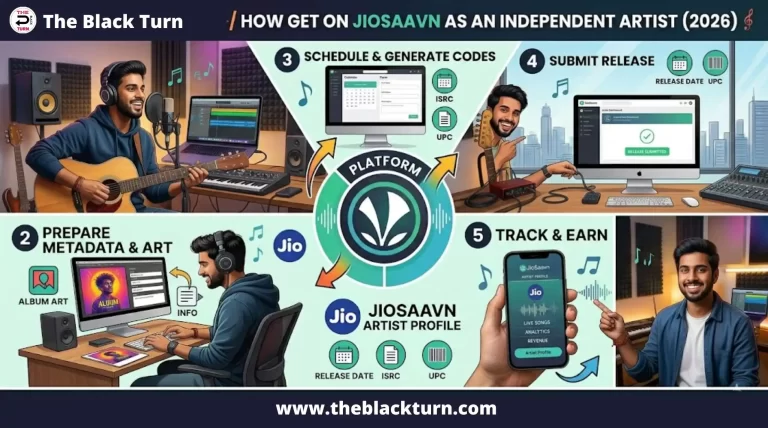
- You create your music – Record, mix, and master your song
- You upload to a distributor – Submit your audio file, artwork, and metadata
- Distributor delivers to platforms – Your music is sent to Spotify, Apple Music, JioSaavn, etc.
- Platforms make it available – Listeners can stream or download your music
- You earn royalties – Revenue flows back through the distributor to you
What is a Music Aggregator?
A music aggregator is a company that collects (aggregates) music from multiple independent artists and labels, then distributes that music in bulk to streaming platforms and digital stores.
How Music Aggregators Work
Instead of each artist having individual deals with Spotify, Apple Music, and hundreds of other platforms, aggregators act as middlemen. They have existing relationships with all major platforms and can efficiently deliver music from thousands of artists at once.
The Aggregation Process:
- Aggregator signs up thousands of independent artists
- Artists upload their music to the aggregator’s platform
- Aggregator bundles all uploads together
- Bulk delivery to streaming platforms via established connections
- Platforms process and publish the music
- Royalties flow back through the aggregator to each artist
Why Aggregators Exist
Streaming platforms like Spotify receive millions of song submissions. It would be impossible for them to manage individual relationships with every independent artist worldwide. Aggregators solve this problem of music distribution by acting as trusted intermediaries.
Music Distribution vs Music Aggregator: Key Differences
Now let’s examine the technical differences between these two concepts:
| Factor | Music Distribution | Music Aggregator |
|---|---|---|
| Definition | The process of delivering music to platforms | A company that collects and distributes music in bulk |
| Function | The action/service | The business model |
| Scope | Can be done by labels, aggregators, or directly | Specifically refers to third-party companies |
| Relationship | Distribution is what happens | Aggregator is who does it |
| Example | “I need distribution for my song” | “I use an aggregator to distribute my music” |
Other Common Terms You’ll Encounter
To avoid confusion between Music Distribution vs Music Aggregator, here’s a glossary of related terms:
Music Distributor
A company or service that delivers music to streaming platforms. Can be a record label, aggregator, or direct-to-platform service.
Music Aggregator
A company that collects music from multiple sources and distributes in bulk. All major indie distribution services are aggregators.
Digital Service Provider (DSP)
The streaming platforms themselves – Spotify, Apple Music, JioSaavn, Amazon Music, YouTube Music, etc.
Record Label
A company that signs artists, funds recordings, and handles distribution (usually through aggregators or their own channels).
Direct Distribution
When an artist or label has a direct deal with streaming platforms without using an aggregator. Typically only available to major labels or very large independents.
Frequently Asked Questions
Is a music aggregator the same as a distributor?
In practical terms, yes. Modern music aggregators perform distribution services. The terms are used interchangeably in the independent music industry. When you use DistroKid, TuneCore, or The Black Turn, you’re using an aggregator that distributes your music.
Do I need a music aggregator to get on Spotify?
Yes, unless you’re signed to a major label with direct platform access. Spotify doesn’t allow individual artists to upload directly. You must use an aggregator or distributor to get your music on Spotify and most other streaming platforms.
Can I distribute music without an aggregator?
For most of the platforms, no. However, some platforms allow direct uploads:
- SoundCloud (free uploads, limited monetization)
- YouTube (via your own channel)
- Bandcamp (direct sales platform)
For Spotify, Apple Music, JioSaavn, and other major platforms, you need an trusted music distributor.
What percentage do music aggregators take?
It varies company by company:
- 0% commission: DistroKid, TuneCore (but charge annual fees)
- 5% commission: The Black Turn (one-time payment, no annual fees)
- 9% commission: CD Baby
- 15% commission: RouteNote Free tier
How long does distribution take?
Typical timelines:
- Fast aggregators (The Black Turn): 1-3 days
- Standard aggregators: 3-7 days
- Slower platforms: Up to 2 weeks
Always submit at least 2-3 weeks before your target release date to allow for playlist pitching.
Which aggregator is best for Indian artists?
For indian artists Considering the
Can I switch aggregators later?
Yes, but it requires:
- Taking down music from old aggregator
- Waiting for removal to complete
- Re-uploading through new aggregator
- Potential loss of stream counts and playlist placements
It’s better to choose wisely from the start.
Do aggregators own my music?
No. Legitimate aggregators never take ownership of your music. You retain full rights to your recordings. They only have a license to distribute on your behalf. Always read terms carefully and avoid any company that claims ownership.
Conclusion
Let’s summarize what we’ve learned:
Music Distribution is the process of getting your music onto streaming platforms and digital stores.
Music Aggregator is a company that collects music from many artists and distributes it in bulk to platforms.
In practice, they’re the same thing for independent artists. When you use services like The Black Turn, DistroKid, or TuneCore, you’re using an aggregator that provides distribution services.
What Should You Do Next?
- Choose an aggregator that fits your needs and budget
- Prepare your music with proper audio quality and artwork
- Upload and distribute your first release
- Promote your music across social media and playlists
- Track your royalties and grow your audience
For emerging artists who want caller tune distribution, affordable pricing, and in-person support, The Black Turn offers comprehensive distribution to 150+ platforms including all major Indian & International streaming services.