You signed up with a music distributor in 2022 or 2023, released a few songs, and now you realize you made the wrong choice. Maybe you are paying yearly USD subscription fees that compound across your catalog. Maybe you discovered your distributor does not cover Indian caller tune networks where 25-50% of your potential Indian revenue lives. Maybe your current distributor has slow customer service, unclear royalty reporting, or hidden charges. Whatever the reason, you want to switch but you are scared of losing your Spotify streams, breaking your monthly listener count, or disrupting your music career.
Good news: switching music distributors without losing streams is completely possible if you follow the correct process. The bad news is most artists do it wrong, lose streaming history, create duplicate content issues, or experience royalty gaps. This blog gives you the complete step-by-step process used by Indian artists successfully switching distributors in 2026.
By the end you will understand exactly how ISRC continuity preserves your streaming history, the correct sequence of takedown and resubmission, when NOT to switch, how to specifically switch from DistroKid, TuneCore, CD Baby, or Amuse to The Black Turn, and how to handle royalty payments during transition. The whole process takes 30-45 days when done correctly, with zero listener downtime.
Why Indian Artists Switch Music Distributors in 2026
Indian artists in 2026 switch distributors for several recurring reasons:
Reason 1. Discovering Caller Tune Revenue Was Missed Entirely
Many Indian artists used DistroKid, TuneCore, or CD Baby for years before realizing these global distributors do not cover Indian caller tune networks at all. For Hindi, Punjabi, Bhojpuri, regional, or devotional artists, this means missing 20-70% of expected revenue. Once realized, switching to a distributor with full caller tune coverage becomes urgent. See caller tune distributor analysis.
Reason 2. Yearly Subscription Cost Compounding
DistroKid, TuneCore, and similar yearly subscription distributors compound costs across catalogs over years. An artist with 10 releases over 3 years on TuneCore pays significantly more than the same artist would have paid for lifetime distribution. When this realization hits, switching to INR lifetime distribution like The Black Turn becomes financially obvious.
Reason 3. Forex and Currency Conversion Losses
Paying in USD and receiving payouts in USD with conversion losses on every transaction adds up. Indian artists increasingly prefer INR billing and INR direct deposit which removes 2-5% forex friction across cumulative transactions.
Reason 4. JioSaavn Delivery Issues
Global distributors deliver to JioSaavn through partner aggregation rather than native delivery. This often results in slower or less reliable JioSaavn delivery. India-native distributors deliver to JioSaavn natively, improving delivery consistency for Indian artists who care about JioSaavn presence.
Reason 5. Customer Service in IST Timezone
Global distributors operate in US timezones with support hours that do not align with Indian working hours. India-based distributors offer customer service in IST, often in Hindi or regional languages, which significantly improves issue resolution for Indian artists.
Reason 6. Hidden Charges and Unclear Royalty Reports
Some artists discover their current distributor has unclear royalty reporting, takes higher percentages than advertised, or charges hidden fees. Switching to a transparent distributor with clear royalty pass-through becomes a transparency upgrade.
Understanding ISRC and Why It Matters for Switching
The single most important concept for switching distributors without losing streams is ISRC continuity. Understanding this prevents the most common switching mistake.
What ISRC Actually Is
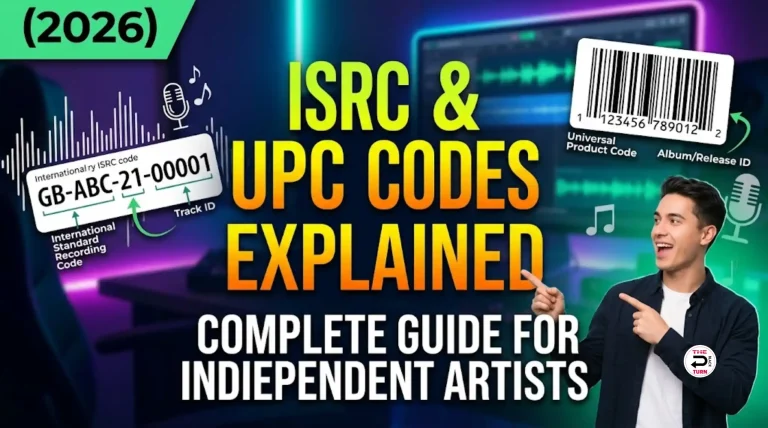
ISRC stands for International Standard Recording Code. It is a 12-character unique identifier assigned to each recorded music track. The format is 2-character country code, 3-character registrant code, 2-digit year, 5-digit designation code. Your distributor assigns ISRCs automatically when you upload your music. See full ISRC definition in glossary.
How ISRC Works on Streaming Platforms
Spotify, Apple Music, JioSaavn, YouTube Music, and other streaming platforms identify your songs by ISRC. When listeners stream your track, the platform attributes the stream to that ISRC. Your streaming history, monthly listener count, playlist additions, editorial placements, and follower notifications are all tied to specific ISRCs.
Why ISRC Continuity Is the Key to Switching
When you switch distributors, you can carry your original ISRCs forward by providing them during the new release upload. The new distributor accepts existing ISRCs rather than generating new ones. Spotify and other platforms recognize the songs as the same recordings. Your streaming history transfers seamlessly because platforms see the same ISRCs they have always tracked.
The fatal mistake to avoid: If you upload to your new distributor and let them auto-generate new ISRCs, your songs appear to platforms as completely new recordings. Spotify treats them as new tracks. Your streaming history, monthly listener count, and playlist placements stay with the old (now-removed) versions instead of transferring. This is the single biggest preventable mistake in distributor switching. Always provide original ISRCs to new distributor.
Retrieving your existing ISRCs: Before initiating any switch, log into your current distributor and locate the ISRC for each of your releases. Most distributors display ISRCs in release details or analytics. Some require you to contact support to obtain them. Document all ISRCs in a spreadsheet alongside song title, album name, release date, and any other metadata. This documentation prevents data loss during transition.
The Complete Step-by-Step Switching Process
The complete process takes 30-45 days when done correctly. Here is the exact sequence:
Phase 1. Documentation (Days 1-3)
- List all your releases from current distributor in a spreadsheet
- Document each ISRC for every track in your catalog
- Note UPC codes for each release (album-level identifier)
- Record original release dates for each track
- Save all metadata including songwriter credits, producer credits, genre tags
- Download original cover art files at full resolution (3000×3000+)
- Note any active editorial placements for context awareness
Phase 2. New Distributor Setup (Days 4-7)
Sign up with your new distributor. For The Black Turn, get started here. Complete identity verification, link your Indian bank account for INR payouts, and complete onboarding. Familiarize yourself with the new distributor dashboard.
Phase 3. Release Upload to New Distributor (Days 8-15)
- Upload each release through new distributor dashboard
- CRITICAL: Provide original ISRCs for each track (do not let auto-generate)
- Use same cover art as original release (or upload original files)
- Match metadata exactly including song title, artist name, songwriter credits
- Set release date as original release date so platforms recognize as same songs
- Add caller tune coverage if not previously distributed
- Submit for review
Phase 4. Verification That New Distribution Is Live (Days 15-25)
Wait for a new distributor to deliver to all platforms. Verify on each platform that your songs now show the new distributor as the source. Check Spotify for Artists, Apple Music for Artists, JioSaavn, YouTube Music to confirm. Do not proceed to takedown until verification is complete on all major platforms.
Phase 5. Takedown from Old Distributor (Days 25-30)
Only after verification of new distribution, log into your old distributor and request takedown of each release. Different distributors have different takedown processes. DistroKid: through the release dashboard. TuneCore: through customer support. CD Baby: through release management. Allow 7-21 days for takedown to fully process across all platforms.
Phase 6. Spotify for Artists Update (Days 30-35)
Update your Spotify for Artists profile to reference a new distributor for future editorial pitching and analytics integration. Your follower count, monthly listeners, and existing analytics remain intact. See SFA management guide.
Phase 7. Final Verification (Days 35-45)
Final check across all platforms to ensure no duplicate content issues, all platforms show new distributor, streaming continues uninterrupted, and follower counts remain intact. Begin receiving first royalty payments through the new distributor in the next payment cycle (typically 60-90 days from first stream through new distributor).
Switching From Specific Distributors to The Black Turn
Switching From DistroKid to The Black Turn
DistroKid users typically switch to escape yearly subscription compounding and gain Indian caller tune coverage. Process: Retrieve ISRCs from DistroKid dashboard, sign up with The Black Turn, upload releases with original ISRCs, verify new distribution live, takedown from DistroKid through dashboard, cancel DistroKid subscription before next renewal.
Switching From TuneCore to The Black Turn
TuneCore users typically switch to escape yearly per-release fees that compound dramatically over catalogs. Process: Retrieve ISRCs (TuneCore may require support contact), upload to The Black Turn with original ISRCs, verify live, request TuneCore takedown through customer support, stop annual renewals. See TuneCore alternative analysis.
Switching From CD Baby to The Black Turn
CD Baby users typically switch for INR pricing, native JioSaavn, and caller tune coverage. Process: Retrieve ISRCs from CD Baby dashboard, upload to The Black Turn with originals, verify live, request CD Baby takedown. Note: CD Baby keeps previously paid releases live indefinitely so the takedown stops them. See CD Baby alternative analysis.
Switching From Amuse to The Black Turn
Amuse users typically switch for full caller tune coverage and to escape revenue share on the free tier. Process similar to other distributors. Retrieve ISRCs from Amuse dashboard, upload with originals, verify live, takedown from Amuse. See free distribution analysis.
Switching From RouteNote to The Black Turn
RouteNote users on free tier typically switch when songs start earning meaningfully and the 15-25% revenue share becomes more expensive than paid lifetime distribution. Process: Retrieve ISRCs from RouteNote, upload to The Black Turn, verify, takedown from RouteNote. The migration typically pays back within months as you keep more of your royalty going forward.
When You Should NOT Switch Music Distributors
Switching is right in many situations but wrong in these specific cases:
Do Not Switch If You Are Mid-Promotion
If you have an active marketing campaign, paid promotion, influencer campaign, or coordinated release, do not initiate distributor switching. The 30-45 day transition window can introduce risk to campaign performance, editorial coordination, and Spotify algorithm signals. Complete the promotion fully, allow 30 days settling, then switch.
Do Not Switch Within 30 Days of New Release
Songs in their first 30 days are in a critical algorithmic growth phase. Switching distributors during this period can disrupt streaming signal continuity and harm long-term track performance. Wait until your most recent release is at least 30 days old.
Do Not Switch With Recent Yearly Subscription Payment
If you recently paid DistroKid or TuneCore yearly subscription, switching mid-subscription means losing remaining subscription value. Wait until close to renewal date so you maximize value from the existing subscription before switching.
Do Not Switch With Pending Royalty Payments
If your current distributor has unpaid royalty waiting for the next payment cycle, complete that payment before switching. Otherwise you risk complications collecting that royalty after takedown. Wait for payment, then switch.
Do Not Switch During Editorial Placement
If your song is currently on a Spotify or JioSaavn editorial playlist, do not initiate switching. Wait until the editorial placement period ends. Editorial placement status can be affected by distributor changes during placement.
Common Switching Mistakes to Avoid
1. Generating New ISRCs Instead of Using Existing
The single biggest mistake. Letting new distributors auto-generate new ISRCs treats your songs as completely new releases on streaming platforms. Streaming history, monthly listener count, playlist placements all stay with old (taken-down) versions. Always provide original ISRCs.
2. Takedown Before New Distribution Live
Some artists rush to take down from old distributors before verifying the new distribution is live on platforms. This creates a gap where songs are unavailable to listeners and streaming continuity breaks. Always verify new distribution live first.
3. Different Metadata Between Old and New
If song title spelling, artist name capitalization, songwriter credits, or other metadata differs between original release and new submission, platforms may treat them as different songs. Match metadata exactly to the original.
4. Wrong Release Date on New Submission
Setting a new release date instead of original release date on new submission can cause platforms to treat it as re-release rather than same recording. Use original release date for catalog migration.
5. Not Updating Bank Account for INR Payouts
Switching to INR-native distributor means setting up an INR bank account for direct deposit. Some artists forget this step and end up with payouts trying to convert from USD. Set up an INR account upfront.
6. Not Verifying Across All Platforms
Verifying new distribution on only Spotify and assuming other platforms followed is risky. Verify Spotify, Apple Music, JioSaavn, YouTube Music individually. Each platform has independent ingestion timing.
7. Skipping Caller Tune Migration
If your old distributor did not include caller tune (DistroKid, TuneCore, CD Baby do not), do not forget to activate caller tune across all 4 networks (Jio, Airtel, Vi, BSNL) with the new distributor. This is one of the main reasons artists switch and missing this defeats the purpose. See best caller tune distributor.
Frequently Asked Questions
Can I switch music distributors without losing Spotify streams?
Yes if you preserve ISRC continuity. Same ISRCs carried to new distributors maintain streaming history, monthly listeners, playlist placements seamlessly. Critical: sign up with new distributor first, resubmit with original ISRCs, verify live, then takedown from old. 30-45 day process.
How does ISRC work when switching?
ISRC is a 12-character unique identifier for each recording. Follow the track, not the distributor. Carry original ISRCs to new distributors and platforms recognized as the same songs preserving streaming history. See ISRC in glossary.
How long does it take to switch distributors?
30-45 days complete transition. Week 1 documentation, Weeks 2-3 new distributor upload and review, Weeks 3-4 platform delivery verification, Weeks 4-6 takedown from old distributor and final verification. Active streaming continues throughout no listener downtime.
When should I NOT switch distributors?
During active promotion. Within 30 days of the new release. Just after yearly subscription renewal. With pending royalty payments. During active editorial placement. Wait for a quiet period between campaigns and releases.
Do I lose Spotify for Artists when switching?
No. SFA tied to artist account not distributor. Followers, monthly listeners, playlist placements, profile photos, bio, analytics all remain. Update SFA settings post-switch to reflect new distributor for future editorial pitching.
How to switch from DistroKid to The Black Turn?
Get DistroKid ISRCs, sign up with The Black Turn, upload releases with original ISRCs, verify live across platforms, takedown from DistroKid, cancel DistroKid subscription. 30-45 days. Gain INR pricing, caller tune 4 networks, native JioSaavn, 95% royalty.
Will switching affect royalty payments?
Timing affected during transition, not earnings. The old distributor pays for streams before switching on their cycle. The new distributor pays for post-switch streams on theirs. 60-90 day reconciliation. Both distributors need correct payment info until final payments are received.
Can I switch during active promotion?
No. Switching during promotion risks campaign performance disruption, editorial coordination challenges, analytics gaps, algorithm signal interference. Complete promotion fully, 30 days settling, then switch.
Conclusion
Switching music distributors without losing Spotify streams is completely achievable when done correctly. The single most important concept is ISRC continuity. Carrying your original ISRCs to the new distributor preserves all streaming history, monthly listeners, playlist placements, and editorial relationships. The process takes 30-45 days with zero listener downtime and zero loss of streaming progress.
The correct sequence is: document current catalog, sign up with new distributor, upload releases with original ISRCs, verify new distribution is live on all platforms, only then initiate takedown from old distributor, update Spotify for Artists settings, and complete final verification. Avoid switching during active promotions, within 30 days of new releases, with pending royalty payments, or during editorial placements.
Ready to switch to better Indian-native music distribution? Get started with The Black Turn and gain INR pricing at ₹599-799 lifetime per release, all 4 caller tune networks (Jio, Airtel, Vi, BSNL), native JioSaavn delivery, YouTube Content ID, 95 percent royalty pass-through in INR, IST customer service, and full platform coverage.
Distributor switching is a one-time process that yields years of better economics, full revenue stream coverage, and proper India-native music distribution. Done correctly with ISRC continuity, you transition seamlessly and emerge with significantly better distribution for your future music career.