Most do not, in the way artists assume. The large distributors run on ticket systems, help centres and chatbots, with email responses commonly taking 24-72 hours and no phone number to call. That is fine when your question is “where is my payment,” and close to useless when your release is broken 48 hours before launch, your track is on the wrong artist profile, or a false Content ID claim is blocking your revenue. Support quality is the least compared and most consequential difference between distributors, largely because affiliate reviewers earn commission on sign-ups, not on how the service behaves six months later.
That is the summary. This article is about what support actually looks like across the industry, when it matters, and how to test it before you have a problem.
Support standards vary by plan and change over time. What follows describes common structures rather than guarantees for any specific company; test your own before relying on it.
Why Nobody Compares Support
Search “best music distributor” and you will find dozens of comparison articles ranking price, platform count, royalty rate and upload speed. Almost none rank support, and the reason is structural.
Most comparison content is affiliate content. The writer earns a commission when you sign up. Support quality only becomes visible months later, when there is nothing left to earn from you. So the reviews measure what is visible at sign-up and ignore what is visible at crisis.
The result is that artists choose distributors based on the moment of purchase and then experience them at the moment of failure, which is a completely different product.
The Four Support Models
| Model | What It Is | Typical Response |
| Self-serve help centre | Articles and FAQs, no human contact | Instant, but only if your problem is common |
| Ticket/email | Submit a form, wait for a reply | Commonly 24-72 hours, longer at peak |
| Chatbot plus escalation | Bot first, human if it fails | Minutes for simple, hours to days for real issues |
| Direct human contact | Phone, WhatsApp or messaging with a person | Minutes to hours |
Most major international distributors operate the first three. Direct human contact is rare, because it is expensive at scale: a company serving millions of artists cannot answer phones, so it builds a help centre instead.
That is a rational business decision. It is also why an artist with an urgent problem often has nowhere to go.
The Five Moments When Support Decides Everything
Support is irrelevant right up until it is the only thing that matters. These are the moments:
- A release is rejected days before launch. Your video is scheduled, your promotion is booked, and your distributor’s automated system rejected the track for an unclear metadata reason. You need a human to tell you exactly what to change, today. A 72-hour ticket queue means missing your date. Common rejection causes are covered in why songs get rejected and how to fix them.
- Your song lands on the wrong artist profile. Extremely common with shared or similar names. Until it is fixed, your streams are credited to a stranger. Fixing it requires the distributor to file a correction with the platform.
- A false Content ID claim blocks your revenue. Someone else’s release matches yours incorrectly, or your own upload gets claimed against you. Every day it stays unresolved is revenue withheld.
- Royalties do not arrive. Payment thresholds, bank detail mismatches, currency issues or reporting delays. You need someone to actually look at your account rather than send you a help article about payment timelines.
- You need something changed after release. A typo in the title, wrong artwork, incorrect credits, adding a territory. Post-release edits go through your distributor, and slow support means the error stays live.
Notice that all five are time-sensitive and none of them are answerable by a help centre article, because they all require someone to act on your specific account.
What to Look For
The realistic standard for an independent artist:
| Feature | Why It Matters |
| A real phone number or messaging channel | Urgent problems need real-time contact |
| Response measured in hours, not days | Release dates do not wait for ticket queues |
| Support in your language | Technical problems are hard enough in a second language |
| Someone who can act, not just advise | The person should be able to file the platform correction |
| Support included in the base plan | Priority support as a paid upsell means standard support is the slow tier |
That last row deserves attention. When a distributor sells “priority support” as an add-on, it is telling you plainly what normal support looks like.
The Black Turn runs on direct human contact by phone and WhatsApp, with support in Hindi, English, Punjabi, Haryanvi and Bhojpuri, included for every artist rather than sold as a tier. For diaspora artists releasing into Indian platforms, being able to explain a problem in your own language to a person who can act on it is the practical difference between a fixed release and a missed one.
How to Test Support Before You Commit
Do this before paying anyone. It takes ten minutes and predicts the next three years of your relationship with them:
- Send a specific pre-sales question, not a generic one. Something like: “If my release is rejected for a metadata issue two days before my scheduled date, what is your process and how quickly do you respond?”
- Time the reply. Note how long it takes and whether it is a template or an actual answer to your question.
- Ask a follow-up. Speed on the first reply means little if the second takes a week.
- Check whether a human is reachable at all. Look for a phone number, WhatsApp line or live chat with escalation, not just a contact form.
- Read recent public reviews specifically for support complaints, ignoring both the five-star and one-star extremes and reading the three-star ones, which are usually the most honest.
If a company cannot answer a clear pre-sales question quickly, it will not answer a crisis question quickly either. You will never have more leverage than before you pay.
The Cost of Bad Support, In Actual Terms
It is easy to treat support as a soft factor. It is not. Put numbers on it:
- A release that misses its scheduled date loses its editorial pitching window, which for many artists is the single biggest discovery opportunity they get, as explained in the distribution timeline guide
- A song credited to the wrong artist profile earns streams that build someone else’s algorithm
- A false Content ID claim left unresolved for a month withholds a month of YouTube revenue, which for some catalogues is the largest income line, discussed in Content ID fees compared
- A metadata error left live permanently damages searchability for the life of the release
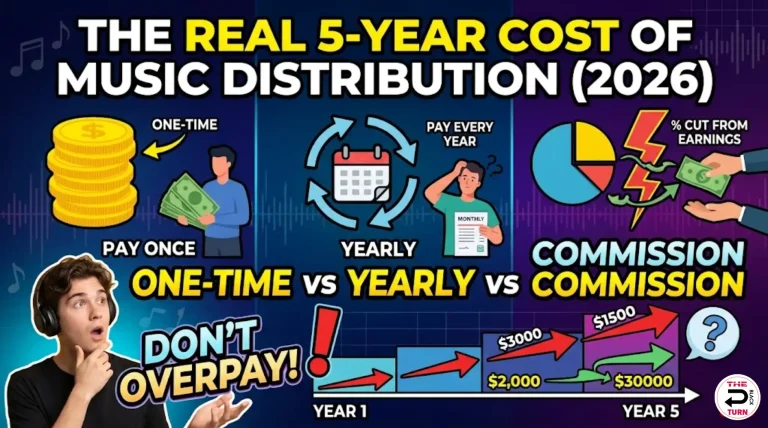
None of these appear on a pricing page, and all of them cost more than the difference between a $20 and a $60 annual plan.
FAQ: Distributor Support
Do music distributors have phone support?
Most large international distributors do not; they operate help centres and ticket systems. Some smaller and regional distributors offer phone or WhatsApp contact.
How long do distributors take to respond?
Ticket-based support commonly takes 24-72 hours, longer during peak periods such as major release weeks and year-end.
Why is support quality rarely compared in reviews?
Most comparison content is affiliate-driven and earns on sign-ups, so it measures what is visible at purchase rather than what happens months later.
What is the fastest way to get a release fixed before launch?
Reach a human directly. If your distributor has no real-time channel, submit the ticket immediately and, in parallel, prepare a corrected version so you can act the moment they respond.
Is paid priority support worth it?
Sometimes, but its existence tells you standard support is the slower tier. Factor the add-on cost into your comparison, as covered in distribution cost models compared.
How do I choose a distributor overall?
Run the 12-point selection checklist and test support before paying. The full field is compared in best music distribution companies 2026.
Conclusion
You will spend most of your time with a distributor needing nothing from them at all. The relationship is defined entirely by the handful of days when you need something urgently, and those days are always attached to a release, a payment or a claim.
The Black Turn’s distribution service is built around reachable humans rather than ticket queues: phone and WhatsApp support in several languages, included for every artist, alongside one-time payment per song, lifetime releases, 95% royalty and free Content ID at 0% cut. Before you commit anywhere, send the pre-sales question and time the reply. That number tells you more about the next three years than any pricing page will.