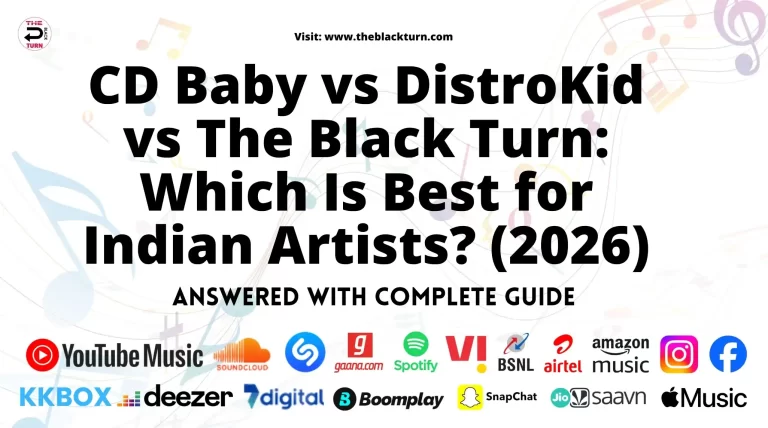
You do not need to be in India to release music there, but you do need an Indian distributor rather than an American one. US-based services like DistroKid, TuneCore, CD Baby and UnitedMasters deliver to Spotify and Apple Music, which reach Indian listeners, but they have inconsistent coverage of JioSaavn, Gaana, Wynk and Hungama, and none of them offer caller tunes on Jio, Airtel, Vi or BSNL because that product does not exist in their markets. An Indian distributor covers all of it plus the same global platforms, typically at ₹599-799 per song (roughly $7-9) paid once, with no annual renewal. If your audience is Indian or diaspora, that single choice determines how much of that audience you can actually reach.
That is the short answer. Now the full guide, because there are around 5 million people of Indian origin in the United States alone, and many of the artists among them are making music for an audience that sits on the other side of a distribution gap they did not know existed.
The Gap Nobody Warns You About
Here is what typically happens. An artist in New Jersey, Toronto or Birmingham releases a Punjabi or Tamil or Hindi track through the distributor everyone recommends in Western artist forums. The song goes live on Spotify and Apple Music. Family in India cannot find it on JioSaavn. There is no caller tune, which is what relatives and friends actually ask for first. Discovery in India never really happens.
Nothing went wrong technically. The artist simply used a service built for a market where JioSaavn, Wynk and caller tunes do not exist, and where nobody thinks to mention them.
The Indian streaming market is enormous by listener volume, and a large share of that listening happens on Indian platforms rather than Spotify. Missing them is not a small gap in coverage; it is missing the majority of the audience you were trying to reach.
What You Get Only From an Indian Distributor
- Guaranteed delivery to Indian platforms. JioSaavn, Gaana, Wynk and Hungama, named explicitly rather than hidden inside a “150+ stores” claim. This matters because international services’ Indian platform coverage is inconsistent, something we documented in the DistroKid India review.
- Caller tunes on all four networks. In India, a caller tune is a normal thing to have and a normal thing for listeners to set. It is also a real revenue stream, often significant in Punjabi, devotional, folk and regional genres, explained in caller tune revenue for artists. No US, UK or European distributor offers it. This is the single clearest reason diaspora artists switch.
- Indian audience context in metadata. Correct language tagging, regional categorisation and playlist routing, which is how Indian platforms decide where your song appears.
- Payment that works both ways. Earnings in INR with a low payout threshold, rather than international processors and high minimums.
You keep everything else too: an Indian distributor still delivers to Spotify, Apple Music, Amazon, YouTube Music, Instagram, TikTok and the rest of the global platforms. You are not choosing India instead of the world; you are adding India to it. The category-level reasoning is in Indian vs international distributors.
Can You Use an Indian Distributor From Abroad? Yes
The practical questions diaspora artists ask, answered:
- Do I need to be in India? No. Distribution is handled online from anywhere.
- Do I need an Indian bank account? Payment methods vary by distributor; ask specifically how international artists are paid before signing up. Many artists use an Indian account they already have, and others arrange alternatives.
- Can I pay from a foreign card? Ask the distributor directly, and confirm the amount in your own currency so you know what you are paying.
- Will my song still reach US listeners? Yes, global platform delivery is included.
- Do I need Indian tax registration? For most independent artists no, but tax treatment of foreign income depends on your country of residence, so check with an accountant. This article is not tax advice.
- Can I release in English or a Western genre? Yes. Language and genre are separate from where your distributor is based.
Step by Step: Releasing From Abroad
- Prepare files to standard. WAV audio and 3000×3000 artwork with no text, URLs or handles. Rejection is the biggest cause of delay, and the 15 common rejection reasons apply the same way from anywhere.
- Choose an Indian distributor with named Indian platform delivery, all four caller tune networks, free Content ID, and support you can actually reach. Run it through the 12-point selection checklist.
- Set language and region metadata correctly. If the track is Punjabi, tag it Punjabi. This is how Indian platforms route you into the right editorial and regional sections.
- Lock one spelling of your artist name and use it identically everywhere. Transliterated names have multiple valid spellings and inconsistent use splits your streams across duplicate profiles.
- Turn caller tune on. For diaspora artists this is usually the single highest-impact addition, and it is available for songs already released elsewhere too.
- Schedule the release 2-4 weeks ahead so you can pitch for editorial playlists and run pre-release promotion.
- Plan for two time zones. Your India audience and your local audience are awake at different times; stagger your social posting rather than doing everything at once.
If this is your first release anywhere, the first-time artist guide covers the fundamentals, and how music distribution works covers the process end to end.
Genre Notes for Diaspora Artists
Punjabi. The largest diaspora music scene by far, with strong bases in Canada, the UK and the US, and an audience that spans Punjab and abroad simultaneously. Caller tune adoption in this genre is high. Detailed guidance in the Punjabi and Bhangra angle style regional guides.
Desi hip-hop. Growing on both sides. Releases usually need to work for a Western streaming audience and an Indian one at the same time, which makes correct metadata and dual-market promotion more important than for either audience alone.
Tamil and Telugu. Substantial diaspora populations in US tech hubs, with strong Indian platform listening back home. Regional platform delivery matters more here than global reach. See the Tamil and Telugu style regional guides for the South Indian market pattern.
Devotional and classical. Consistent, loyal listening across generations of diaspora families, and among the strongest caller tune categories in India.
Bollywood covers. Popular and legally risky. Covering a film song requires a mechanical licence from the rights holder; the process is in the cover song legal guide.
The Money Side, Honestly
Two structural advantages matter for artists abroad:
One-time cost instead of annual renewal. Most Western distributors charge every year and remove your catalogue if you stop, examined in what happens when you stop paying. A one-time model at roughly $7-9 per song means the release stays live permanently, which matters more when your life and income are in a different country from your audience.
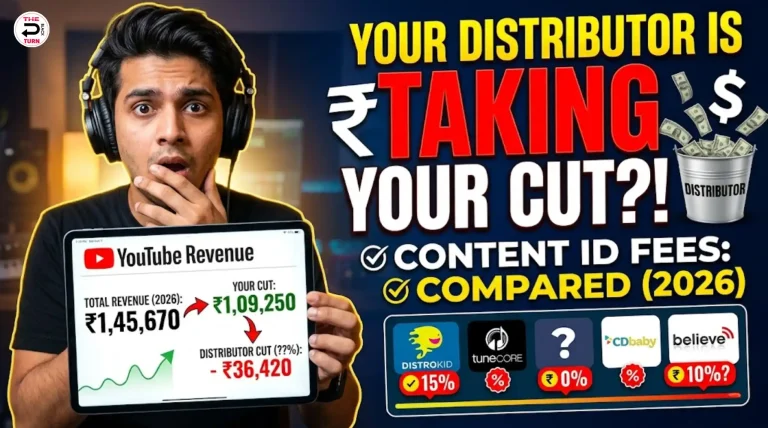
No cut on YouTube Content ID. Diaspora music travels through YouTube more than almost any other route: wedding videos, dance covers, reels, community events. Every one of those can generate Content ID revenue. A distributor taking 20-30% of that keeps taking it forever, as broken down in Content ID fees compared.
FAQ: Releasing in India From Abroad
Can I release music in India while living in the USA?
Yes. Use an Indian distributor, which delivers to Indian platforms and caller tune networks as well as all the global platforms you already reach.
Will DistroKid or TuneCore get my song on JioSaavn?
Coverage of Indian platforms is inconsistent across international services, and none of them offer caller tunes. Confirm platform lists explicitly rather than assuming.
Can NRI artists get caller tunes on Indian networks?
Yes, through an Indian distributor. Caller tune is available on Jio, Airtel, Vi and BSNL, including for songs already released elsewhere.
Do I lose global reach by using an Indian distributor?
No. Indian distributors deliver to Spotify, Apple Music, Amazon, YouTube Music and other global platforms alongside Indian ones.
How much does it cost?
Typically ₹599-799 per song, roughly $7-9, paid once with lifetime distribution, versus annual subscriptions elsewhere. Model comparison in distribution cost models.
How do I get paid living abroad?
Ask your distributor directly how international artists receive payment, and confirm currency handling and thresholds before signing up.
Conclusion
If your music is made for Indian ears, it should be distributed by someone who understands what Indian ears listen on. That is not a patriotic argument, it is an operational one: JioSaavn, Wynk, Gaana and caller tunes are where a large part of your potential audience actually is, and Western distributors cannot take you there.
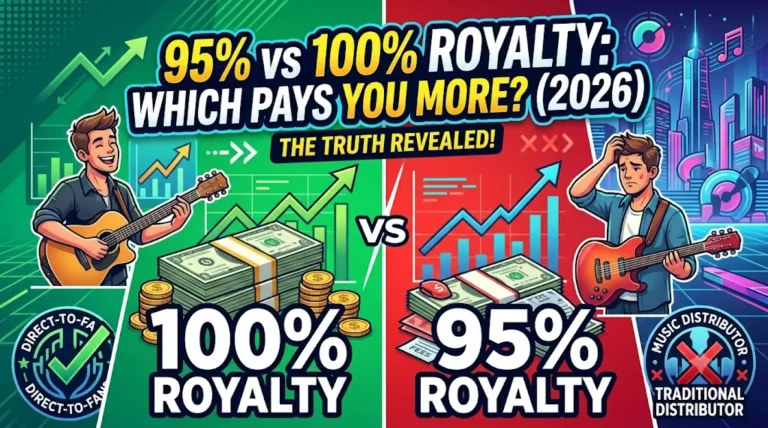
The Black Turn works with artists wherever they live: ₹599-799 per song (roughly $7-9) paid once with lifetime distribution, 95% royalty, 150+ Indian and international platforms, free YouTube Content ID at 0% cut, caller tunes on Jio, Airtel, Vi and BSNL including for older releases, and support by phone and WhatsApp in English, Hindi, Punjabi and other Indian languages. You already left India. Your music does not have to.

![Best Music Distribution Companies in India 2026: Complete Guide for Independent Artists [Free + Paid]](https://theblackturn.com/blogs/wp-content/uploads/2026/04/best-music-distribution-companies-in-india-2026.png-768x403.webp)