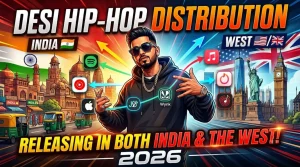
Tamil and Telugu artists in the US face a specific problem: their strongest potential audience is split between American tech-hub communities and listeners back home in Tamil Nadu, Andhra Pradesh and Telangana, and those two groups listen on different platforms. American distributors cover Spotify and Apple Music but have inconsistent JioSaavn, Gaana and Wynk delivery, and none offer caller tunes on Indian networks. An Indian distributor covers both sides at once, including caller tunes, typically at ₹599-799 per song (roughly $7-9) paid once with no annual renewal. For independent South Indian music, where the film industries dominate attention and independent artists have to build audiences directly, reaching every platform matters more than it does for artists with one home market.
That is the summary. Below is what makes the South Indian independent scene structurally different, and what to get right when releasing from abroad.
Where Your Audience Actually Is
Tamil and Telugu music has one of the most geographically concentrated diasporas in the world, particularly in the US:
- The Bay Area, Dallas, Austin, Seattle, New Jersey and Chicago hold large Tamil and Telugu populations, heavily concentrated in tech, with strong cultural association networks, festivals and event circuits
- Chennai, Hyderabad, Coimbatore, Vijayawada and Bengaluru are where the bulk of listening happens, largely on Indian platforms and YouTube
The uncomfortable arithmetic: if you release only through a US distributor, you reach your American community reasonably well and a fraction of the much larger audience at home. The category-level explanation is in Indian vs international distributors, and the general diaspora guide is releasing music in India from the USA.
What Makes South Indian Independent Music Different
- The film industries dominate the conversation. Kollywood and Tollywood soundtracks command enormous attention, which makes independent releases harder to surface but also means an audience already primed to consume music in your language at volume.
- The independent scene grew through YouTube. Independent Tamil and Telugu music built itself on YouTube long before streaming mattered, which is why Content ID terms matter so much for these artists. Covers, dance videos, reels and event uploads all generate claimable revenue, and a distributor taking 20-30% of it takes it permanently, as broken down in Content ID fees compared.
- Devotional and classical traditions are consistently strong. Carnatic, devotional and temple-associated music sustains listening across generations of diaspora families, and these are among the strongest caller tune categories in India.
- Language tagging genuinely decides discovery. Tamil and Telugu are distinct languages with distinct editorial surfaces on Indian platforms. Tagging a Telugu track as “Indian” or as Hindi removes it from the exact playlists most likely to carry it.
The Caller Tune Point
For artists releasing from the US, this is usually the single biggest gap in their setup, because no American distributor can offer it and most artists therefore never learn it exists as an option.
A caller tune is a normal, everyday thing for listeners in India to set, and it earns each time someone does. In devotional and film-adjacent Tamil and Telugu music, adoption is high. Family and friends back home will ask for the code before they ask for a Spotify link. How the revenue works is in caller tune revenue for artists, and it can be added to songs already released elsewhere.
Seven Things to Get Right
- Use an Indian distributor so JioSaavn, Gaana, Wynk and Hungama are guaranteed alongside Spotify, Apple Music and every global platform
- Tag the language precisely, Tamil or Telugu, never a generic regional label
- Lock one Latin-script spelling of your name. South Indian names transliterate several valid ways, and inconsistent spellings split your streams across duplicate profiles, explained in metadata mistakes
- Turn caller tune on, especially for devotional, classical or melodic tracks
- Protect YouTube revenue. Choose free Content ID with no cut, since your genre’s income is disproportionately there
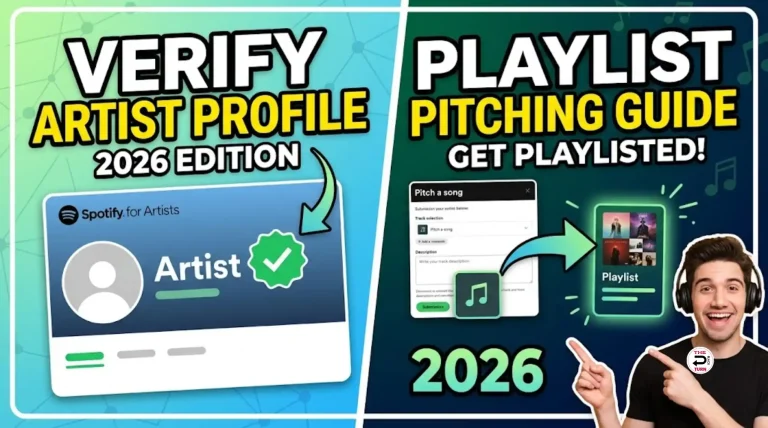
- Schedule the release 2-4 weeks ahead for editorial pitching, covered in Spotify playlist pitching
- Licence any film-song covers. Kollywood and Tollywood covers are hugely popular and require a mechanical licence, explained in the cover song legal guide
Planning Around Two Audiences
A practical difference from single-market artists: your promotion has to run in two time zones and two contexts.
In the US: community associations, cultural festivals, campus events, local shows. This audience discovers through Instagram, WhatsApp groups and community networks, and listens on Spotify and Apple Music.
In India: YouTube first, Indian streaming platforms second, caller tunes as a social signal. Discovery is heavily short-form video driven.
Stagger release-day activity rather than posting everything at once, and treat the two as one release with two campaigns. The week-by-week structure is in the music marketing guide.
FAQ: Tamil and Telugu Distribution From the USA
Can I release Tamil or Telugu music in India while living in the US?
Yes. Use an Indian distributor, which delivers to Indian platforms and caller tune networks as well as the global platforms your US audience uses.
Will DistroKid or TuneCore reach listeners in Chennai or Hyderabad?
Partly, through Spotify and Apple Music. JioSaavn, Gaana and Wynk coverage is inconsistent and caller tunes are not offered at all.
Can I get a caller tune on Indian networks from abroad?
Yes, through an Indian distributor, on Jio, Airtel, Vi and BSNL, including for songs already released elsewhere.
Do I lose my US listeners by using an Indian distributor?
No. Indian distributors deliver to Spotify, Apple Music, Amazon, YouTube Music and every major global platform.
Should I tag my track as Tamil or as Indian?
Tamil, or Telugu, specifically. Generic tagging removes you from the language-specific editorial playlists most likely to feature you.
Can I release a cover of a Kollywood or Tollywood song?
Only with a mechanical licence from the rights holder. Unlicensed covers are rejected or removed. See the 12-point distributor checklist before choosing a service.
Conclusion
South Indian independent music has a genuine advantage that most artists underuse: an audience that already exists in two countries, is culturally organised in both, and consumes music in your language at scale. What limits most releases is not the audience, it is a distribution setup that only reaches half of it.
The Black Turn works with artists wherever they live: ₹599-799 per song (roughly $7-9) paid once with lifetime distribution, 95% royalty, 150+ Indian and international platforms, free YouTube Content ID at 0% cut, caller tunes on Jio, Airtel, Vi and BSNL including for older releases, and human support by phone and WhatsApp. Release once, and be findable in Dallas and Chennai on the same day.