An ISRC identifies a specific recording; a UPC identifies a release. The ISRC follows a single track everywhere it goes and is what ties your accumulated streams to that recording, permanently. The UPC identifies the package it was released in, whether a single, EP or album. You do not buy either separately in most cases, because distributors issue both free with your release. The most important practical rule is this: the same recording keeps the same ISRC forever, even if you change distributors, and a remaster or new version gets a new one. Get that wrong and your play counts do not follow you.
That is the summary. This guide covers what each code does, how to get them, when a new one is required, and the mistakes that cost artists their history.
ISRC: The Recording’s Fingerprint
ISRC stands for International Standard Recording Code. It is a 12-character identifier that stays attached to one specific recording for its entire life.
What it does:
- Tells every platform that the file delivered today is the same recording that has been streaming for three years
- Carries your stream count, playlist history and listener saves across distributor changes
- Links Content ID claims to the right owner
- Routes performance royalties to the correct recording
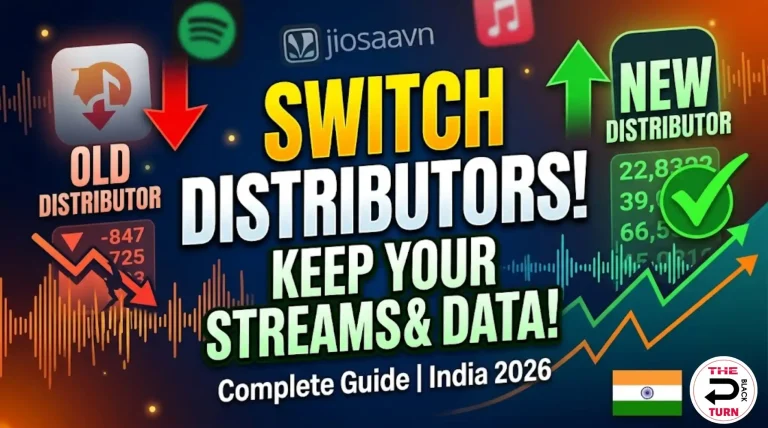
One recording, one ISRC, forever. If you switch distributors and deliver with the same ISRC, your history follows. Deliver with a new one and platforms treat it as a brand-new track with zero streams. This is the single most consequential detail in switching distributors without losing streams.
UPC: The Release’s Barcode
UPC stands for Universal Product Code, the same barcode system used in retail. In music it identifies a release rather than a recording.
- A single gets one UPC covering the release
- An EP or album gets one UPC covering the whole package
- Every track inside it keeps its own individual ISRC
So a five-track EP has one UPC and five ISRCs. If you later release one of those tracks as a standalone single, that release gets a new UPC while the track keeps its original ISRC.
How to Get Them
Through your distributor, free, in almost every case. Reputable distributors issue both automatically when you submit a release, at no extra cost. If a distributor charges separately for identifiers, that is a fee worth questioning, and it belongs in the list in hidden distribution fees.
You can also register directly with a national ISRC agency to obtain your own registrant code, which lets you issue ISRCs yourself. This is worth doing if you run a label, release very high volume, or want identifiers that are unambiguously yours rather than issued under a distributor’s prefix. For most independent artists it is unnecessary.
Important either way: whoever issues them, confirm you can carry them to another distributor later. Any service worth using will allow it.
When a New ISRC Is Required
This is where artists get confused. The rule is about the recording, not the release.
| Situation | New ISRC? |
| Same recording, new distributor | No, keep the original |
| Same recording on a single, then on an album | No, same ISRC both times |
| Radio edit or shortened version | Yes, different recording |
| Remaster | Yes, it is a new recording |
| Remix | Yes |
| Live version | Yes |
| Acoustic or alternate take | Yes |
| Instrumental version | Yes |
| Re-recorded version of your own song | Yes |
The simple test: if a listener would hear a different audio file, it needs its own ISRC. If it is literally the same file, it keeps the original code.
Why This Matters More Than It Sounds
Three practical consequences:
- Your stream history is portable, but only through the ISRC. Everything you have built on a track, play counts, algorithmic behaviour, listener saves, is attached to that code rather than to your distributor account. It is the thing that makes your catalogue genuinely yours in practice, not just in principle, which connects to the ownership question in who owns your music.
- Royalty routing depends on it. Performance royalties and Content ID revenue are matched by ISRC. A wrong or duplicated code sends money to the wrong recording, which is difficult to unwind.
- Analytics only work if codes are clean. If the same recording exists under two ISRCs because of a botched migration, every report about that song is now split in half and neither half is accurate.
The Five Mistakes That Cost Artists Most
- Letting a new distributor generate fresh ISRCs during a migration. The most common way artists lose their play counts.
- Reusing one ISRC across different recordings. For example, using the album version’s code for the radio edit. This corrupts reporting on both.
- Not recording your codes anywhere. If your distributor account closes or the company shuts down, and you never exported the list, reconstructing it is painful.
- Assuming a remaster keeps the old code. It does not. A remaster is a new recording and needs its own ISRC, though the release it appears in may reuse or need a new UPC depending on packaging.
- Treating UPC and ISRC as interchangeable. They serve different levels: one for the package, one for each recording inside it. Mixing them up causes ingestion errors, a common trigger in release rejections.
What to Keep on File
Maintain one document containing, for every release:
- UPC of the release
- ISRC of every track
- Original release date
- Exact artist name spelling used
- Composer and lyricist legal names
- Label name
Update it the day each release goes live. This takes two minutes and is the difference between a smooth distributor migration and a lost afternoon, alongside the wider metadata discipline covered in metadata mistakes that kill streams.
FAQ: ISRC and UPC Codes
What is an ISRC code?
A 12-character identifier that permanently identifies one specific sound recording and carries its stream history across platforms and distributors.
What is the difference between ISRC and UPC?
ISRC identifies a recording; UPC identifies a release. An album has one UPC and one ISRC per track.
Do I have to pay for ISRC codes?
Usually not. Most distributors issue ISRCs and UPCs free with your release. You can register with a national agency for your own registrant code if you want to issue them yourself.
Do I need a new ISRC if I change distributors?
No, and you should not accept one. Carry the original ISRC so your streams and history stay attached to the recording.
Does a remix or remaster need a new ISRC?
Yes. Any different audio file, including remixes, remasters, live, acoustic and instrumental versions, needs its own code.
What happens if two recordings share an ISRC?
Reporting and royalty routing break for both, and untangling it after the fact is slow. One code per unique recording, always. For choosing a distributor that handles this properly, see the 12-point checklist.
Conclusion
ISRC and UPC codes look like bureaucracy on a submission form. They are actually the deeds to your streaming history: the reason a track you released in 2022 still shows its full play count after you move distributors twice.
Keep one file with every code you own, insist on carrying your ISRCs whenever you move, and never let a new distributor issue fresh codes for old recordings. The Black Turn issues free ISRC and UPC codes with every release, accepts your existing codes when you migrate, and charges one-time per song with no renewal, so the catalogue those codes point to stays live regardless of what you pay next year.