Annual renewal fees pay for two different things bundled together: the right to upload new releases, and the right to keep your existing catalogue online. The first is a fair charge for a real service. The second is where the model turns against artists, because a song delivered three years ago requires almost no ongoing work, yet stopping payment removes it from every platform. A better structure separates them: pay once per song to put it out and keep it out permanently, and pay again only when you want to release something new. That is the difference between a subscription and a purchase, and over a five-year catalogue it decides both what you spend and what you risk.
That is the summary. This article explains what renewal fees genuinely cover, when paying them makes sense, and what to look for if you would rather not.
What the Annual Fee Actually Buys
Being fair to the industry, distribution does involve real ongoing costs:
- Platform relationships and delivery infrastructure. Maintaining connections with 150+ stores, handling their changing specifications, and re-delivering when platforms request updates.
- Royalty collection and accounting. Pulling reports from dozens of platforms in different currencies and formats, reconciling them and paying out.
- Rights administration. Content ID management, claim disputes, takedown requests, metadata corrections.
- Support and systems. Dashboards, storage, security, staff.
None of that is free. The honest question is not whether distributors should charge, but which parts of that cost scale with your catalogue sitting there quietly, and which do not.
Uploading a new release costs the distributor real work: ingestion, quality checks, delivery to every store. A three-year-old release that is already live costs comparatively little to leave alone. Charging the same annual amount for both treats them as identical, and they are not.
The Structural Problem With Renewal
Here is the part that matters practically. On a renewal model:
- Year one, you pay and release. Fair exchange.
- Year two, you pay again. You may or may not release anything.
- Year three, life gets complicated and you miss a payment.
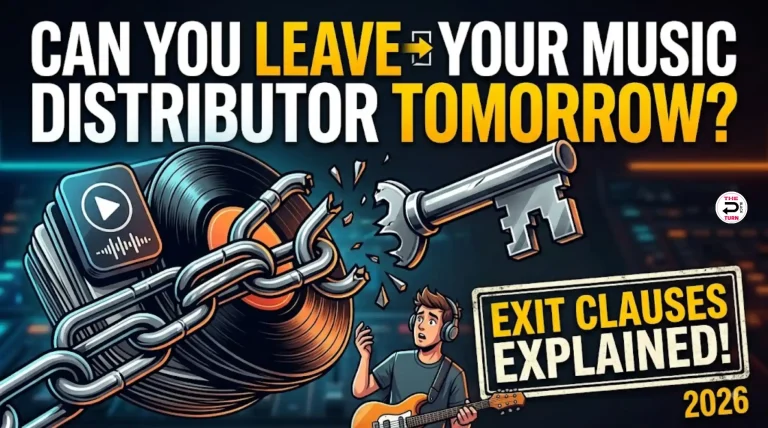
- Your entire catalogue, including the songs you paid to distribute in year one, disappears from every platform.
You paid for delivery, and what you actually rented was continued availability. The catalogue was never yours to keep in the distribution sense, and most artists do not realise that until the removal email arrives. What gets lost with it, streams, playlist placements, saved libraries, shared links, is detailed in what happens when you stop paying your distributor.
Several subscription services now sell a per-release add-on that keeps music live after cancellation. It is a genuine improvement, and it is also an acknowledgment of the problem: you are being offered the chance to buy, separately, the permanence you assumed you already had.
When Renewal Fees Are Worth Paying
This is not an argument that annual pricing is always wrong. It is clearly the better deal when:
- You release constantly. Forty releases a year under one flat annual fee is excellent value, and far cheaper than any per-song model. If your output is that high and consistent, subscription pricing is built for you.
- You use the ecosystem heavily. If the plan includes tools you genuinely rely on, splits automation, advanced analytics, promotional features, then the fee is buying more than delivery.
- Your income is stable and predictable. If you are certain you will keep paying every year without interruption, the dependency costs you nothing.
The problem is not the model. It is that the model is sold to everyone, including artists who release twice a year and whose income is anything but predictable.
The No-Renewal Alternative, Precisely Defined
“Lifetime” is a word many services use loosely, so here is the specific version to ask about:
| Question | What a Real No-Renewal Model Answers |
| Do released songs stay live if I never pay again? | Yes, permanently |
| Do they keep earning? | Yes, royalties continue |
| Can I still see reports and withdraw earnings? | Yes, dashboard access retained |
| When do I pay again? | Only when uploading new music |
| Is there a fee to keep old releases live? | No |
That last row is what separates a genuine one-time model from a subscription with a paid escape hatch. The Black Turn operates this way at ₹599-799 per song (roughly $7-9): pay once, the release stays live for life, earnings and reports remain accessible, and you pay again only for new uploads.
The Five-Year Arithmetic
A working artist with ten songs, released across two years, held for five:
| Annual subscription | One-time per song | |
| Fees paid | 5 annual payments plus forex if billed in USD | Roughly $70-90, once |
| Cost of a missed payment | Full catalogue removed | Nothing |
| Cost of an 18-month break | Fee still due, or catalogue removed | Nothing |
| Cost to keep music live after leaving | Per-release add-on fee | Not applicable |
| Access to reports years later | Tied to active account | Retained |
At ten releases the fee columns are close. The risk columns are not close at all, and risk is the thing artists systematically underprice when comparing distributors, because at sign-up nobody expects to miss a payment.
The full model-by-model breakdown, including commission structures, is in one-time vs yearly vs commission.
Questions Worth Asking Your Current Distributor
- If I stop paying, what happens to releases I already paid to distribute?
- Is there a fee to keep them live, and how much per release?
- Does my renewal cover new uploads, existing catalogue, or both?
- Do I keep access to royalty reports if my subscription lapses?
- Are accrued royalties still paid out after cancellation?
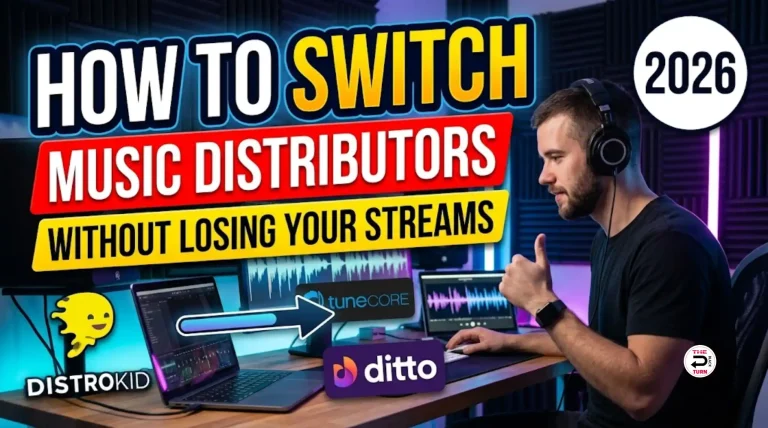
Ask by email and keep the answers. The reasoning behind documenting everything is in the distribution agreement red flags guide, and if the answers push you toward moving, switching without losing streams covers the process.
FAQ: Renewal Fees
Why do music distributors charge every year?
Because they carry ongoing costs for delivery infrastructure, royalty accounting, rights administration and support. The debate is over whether keeping an already-delivered release online justifies the same recurring charge as new uploads.
What happens if I do not renew?
With most subscription services, your catalogue is removed from streaming platforms unless you buy a per-release option to keep it live.
Is there music distribution without renewal fees?
Yes. One-time per-song models keep releases live permanently after a single payment, with further payment required only for new uploads.
Is a yearly plan cheaper than paying per song?
At high release volume, usually yes. At low or irregular volume, or if there is any chance of a payment gap, one-time pricing usually costs less and carries no removal risk.
Do I keep earning if I stop paying?
Under a one-time model, yes, releases stay live and continue earning. Under a subscription, earnings stop with the distribution.
How do I compare distributors on this properly?
Run a five-year total including fees, forex, add-ons and the cost of keeping music live after cancellation. See best music distribution companies 2026 and the 12-point checklist.
Conclusion
There is nothing wrong with paying a distributor. There is something worth questioning about paying indefinitely to keep work online that was already paid for, especially when the alternative exists and costs less over any realistic timeline.
The distinction to hold onto is simple: pay for new work, not for permission to keep old work available. The Black Turn’s distribution service is built on exactly that line, with one-time payment per song, releases live for life, 95% royalty, free Content ID at 0% cut, and reports and earnings that stay accessible whether or not you ever upload again. Ask your current distributor the five questions above. Their answers will tell you which kind of arrangement you are actually in.