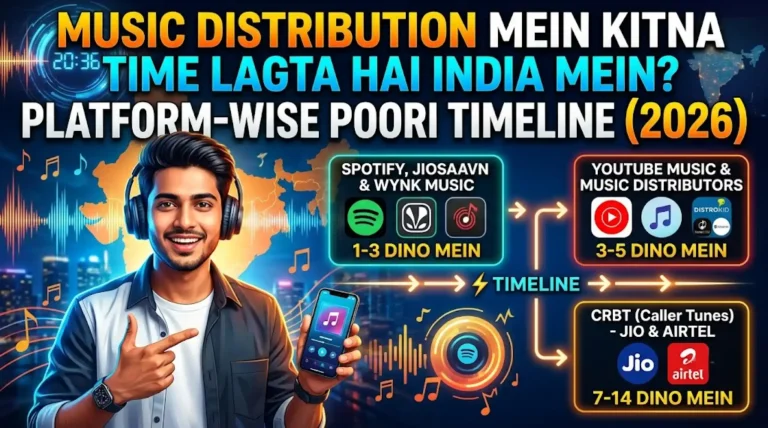
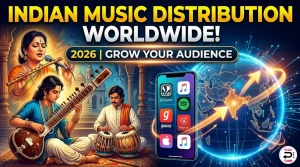
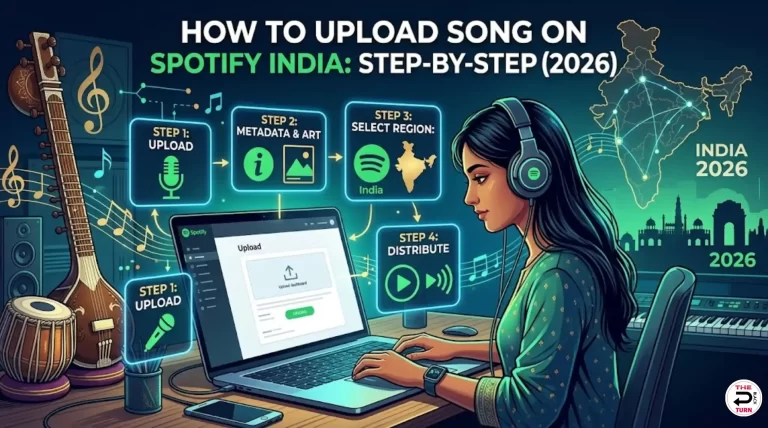
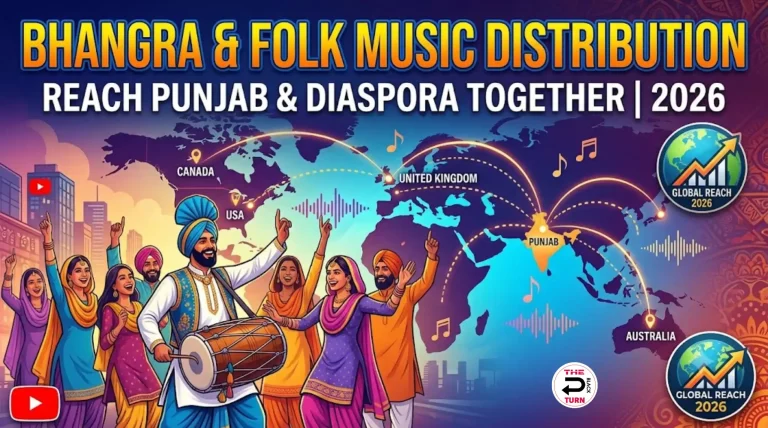
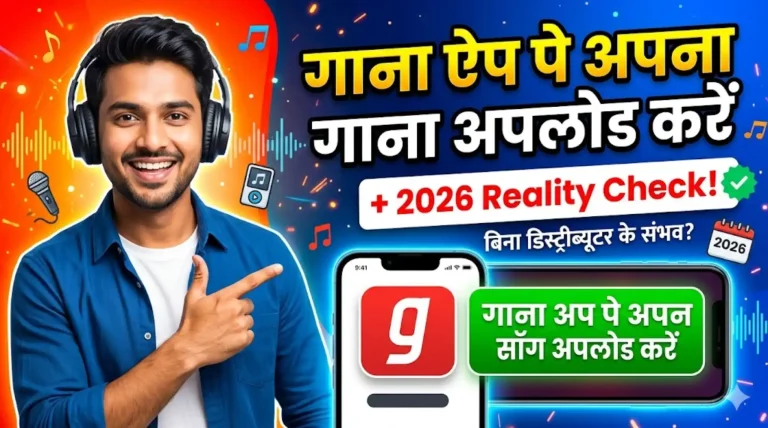
India is one of the largest music markets in the world by number of listeners, and a large share of that listening happens on Indian platforms rather than Spotify. Getting there requires a distributor that explicitly delivers to JioSaavn, Wynk, Gaana and Hungama, which most Western distributors either do not do or do inconsistently. Spotify India will carry you automatically through any distributor, but treating that as “released in India” misses where a substantial part of the audience actually is. An Indian distributor covers all of it, plus caller tunes on Indian telecom networks, while still delivering to every global platform you already use, typically for a one-time fee of roughly $7-9 per song.
That is the summary. Below is what each platform is, why coverage gaps happen, and whether entering the Indian market is worth it for an artist outside India.
Why India Is Worth Considering
Three facts shape the opportunity:
- Scale of listenership. India’s streaming audience is enormous in volume terms, driven by cheap mobile data and a young population. Per-stream rates are lower than in Western markets, but the volume is on a different order.
- Platform fragmentation works in your favour. Unlike markets where Spotify and Apple dominate, Indian listening is spread across JioSaavn, Wynk, Gaana, Hungama, YouTube and Spotify. Being present on all of them is a meaningful competitive advantage over artists who are only on two.
- Genre openness. International genres, particularly electronic, hip-hop, lo-fi, ambient and instrumental, have real Indian audiences. Instrumental and mood-based music travels across language barriers entirely.
Realistic expectation setting: India will not replace your home-market revenue. It adds a large volume of low-rate streams, plus two revenue streams that do not exist elsewhere. For catalogue artists, particularly instrumental and lo-fi producers, that combination compounds.
The Platforms, Briefly
| Platform | What It Is |
| JioSaavn | Major Indian streaming service with a very large user base |
| Wynk Music | Telecom-linked streaming platform with wide reach |
| Gaana | Long-established Indian streaming platform |
| Hungama | Music and entertainment platform with a large catalogue |
| YouTube | The dominant music discovery platform in India |
| Spotify India | Growing rapidly, especially in urban and younger segments |
Why Most Distributors Cover This Badly
Not because they are careless, but because of how distribution works. Each platform requires a separate delivery relationship, technical integration and ongoing maintenance. Distributors prioritise the platforms their core customers care about.
For a US-focused distributor, that means Spotify, Apple, Amazon, and increasingly TikTok. Indian platforms sit in the long tail, so coverage is often partial, inconsistent, or listed under a general “150+ stores” claim without naming which ones. We documented that gap in the DistroKid India review.
How to check rather than assume: ask your current distributor to confirm, in writing, whether they deliver to JioSaavn, Wynk, Gaana and Hungama specifically. A general store list is not an answer.
The Two Things No Western Distributor Offers
- Caller tunes. In India, listeners set songs as their phone’s caller tune, and each activation generates revenue. It exists on Jio, Airtel, Vi and BSNL, and no US or European distributor delivers to those networks because there is no equivalent product in their markets. How the revenue works is in caller tune revenue for artists.
For international artists this is unfamiliar, so the honest framing is: it is not relevant to every genre, but for instrumental, ambient, devotional and melodic music it is a genuine additional stream that costs nothing extra to enable at release.
- Indian-market metadata handling. Language and regional tagging determine which sections and editorial playlists your track can appear in. A distributor unfamiliar with Indian platforms tends to leave these fields generic, which limits discovery. The general principle is covered in metadata mistakes.
Practical Steps for an International Artist
- Decide whether India fits your catalogue. Instrumental, lo-fi, electronic, ambient and film-adjacent music travels easily. Lyric-dependent music in English does too, but competes differently
- Choose a distributor that names Indian platforms explicitly rather than implying them, using the 12-point distributor checklist
- Keep your global delivery intact. An Indian distributor still delivers to Spotify, Apple Music, Amazon and everything else, so this is an addition rather than a swap, explained in Indian vs international distributors
- Tag language accurately, including marking instrumental tracks as instrumental rather than defaulting to English
- Enable caller tune where the genre fits, and note it can also be added to songs released earlier elsewhere
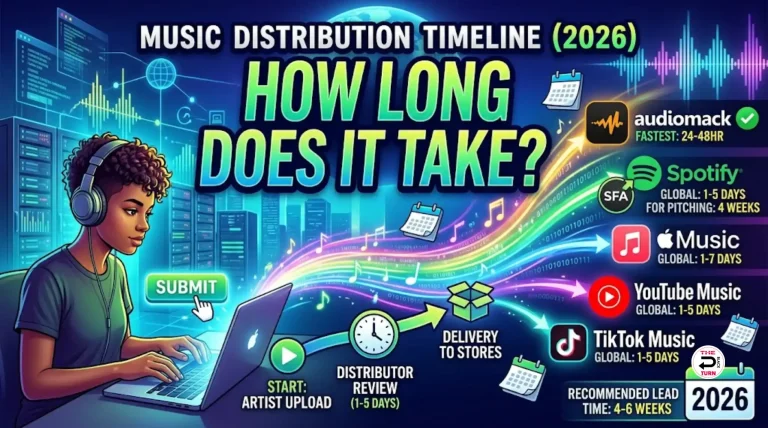
- Schedule the release 2-4 weeks ahead so editorial pitching is possible on all platforms, per Spotify playlist pitching
- Confirm how you get paid as an artist based outside India before signing up, including currency and thresholds
Is It Worth It? An Honest Answer
Probably yes if: you make instrumental, lo-fi, ambient, electronic or devotional music; you are building a catalogue rather than chasing single hits; you already have any Indian or South Asian listenership showing in your analytics; or your distribution costs are one-time rather than recurring, so adding reach costs nothing ongoing.
Probably not a priority if: your music is highly lyric-dependent in a language with no Indian audience; you release rarely and your energy is better spent on your home market; or your current distributor charges per-territory or per-store fees that make expansion expensive.
Check your data first. Look at your Spotify for Artists listener map. If India already appears in your top twenty countries without any effort, the platforms you are missing are likely worth more than the ones you are on there.
FAQ: Indian Platform Distribution
How do I get my music on JioSaavn?
Through a distributor that delivers to JioSaavn explicitly. There is no direct upload for artists on any major Indian platform.
Do international distributors cover Indian platforms?
Inconsistently. JioSaavn is often included; Gaana, Wynk and Hungama frequently are not, and caller tunes never are. Ask for written confirmation.
Will I lose global reach by using an Indian distributor?
No. Indian distributors deliver to Spotify, Apple Music, Amazon, YouTube Music and other global platforms alongside Indian ones.
Are Indian streaming rates lower?
Per-stream rates are generally lower than Western markets, offset by listener volume and by additional revenue streams like caller tunes.
Does my music need to be in an Indian language?
No. Instrumental, electronic, lo-fi and ambient music travels without language barriers, and English-language music has a real Indian audience.
How much does it cost to add Indian distribution?
Typically ₹599-799 per song, roughly $7-9, paid once with lifetime distribution rather than an annual fee. Model comparison in one-time vs yearly vs commission.
Conclusion
Most artists outside India assume they are “in the Indian market” because Spotify operates there. In practice they are present on one platform in a market where listening is spread across six, and absent from a revenue stream that only exists there.
Whether that gap is worth closing depends on your genre and your data. If India already shows up in your analytics, or your music is instrumental or mood-based, the cost of finding out is one release. The Black Turn delivers to 150+ Indian and international platforms for ₹599-799 per song (roughly $7-9) paid once, with 95% royalty, free Content ID at 0% cut and caller tunes on Jio, Airtel, Vi and BSNL. Check your listener map first, then decide.